Group 6 Yale Center for British Art.

Unknown artist
Advertisement for ‘List of New Prints and Engraved Works published by W.B. Cooke 9 Soho Square’
Between 1815 and 1823
A crumpled newspaper advertisement for the sale of artworks. Popular artists listed such as Peter DeWint and Joseph Mallord William Turner dominated museums and the art market in the 1800s. Their works were highly valued; unlike the anonymous art we’ll be unearthing.
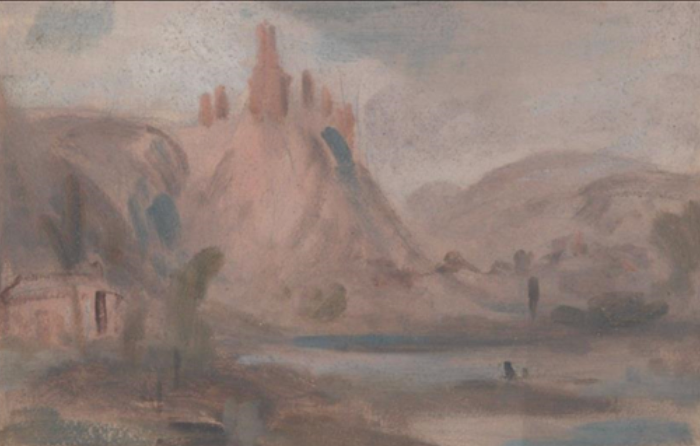
Unknown artist
?Petit Andeleys on the Seine
1822 to 1825
Purchased as a William Turner piece, it was later attributed to Peter DeWint, before being recognised as unknown.
Attaching those names adds the expectations associated with those artists. We lose focus of the art itself.
On the middle hill of the painting is the ruins of Gaillard castle. When Normandy was under English control in 1196, it was designed to guard against French advances.
Could these sweeping drags of colour display peace after conflict?
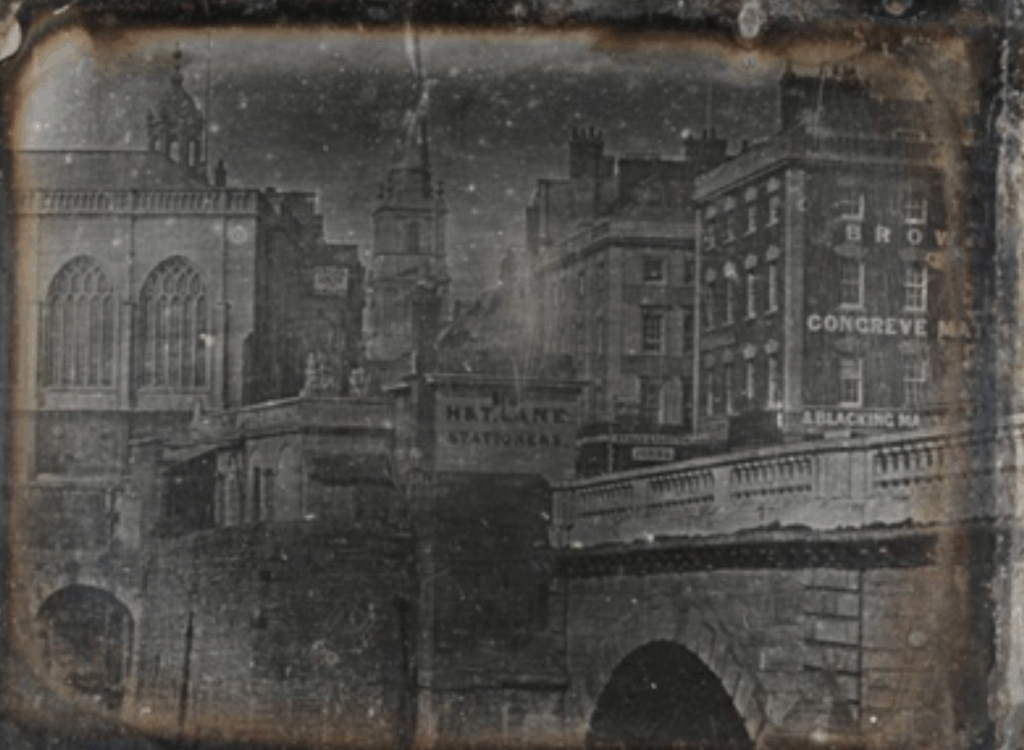
Unknown artist
Toll Houses on Bristol Bridge
About 1845
The view from below creates a feeling of intimidation by the big city.
Popular photographer Calbert Jones also photographed this scene, see ‘Study of a Bridge’. However, in his print, business signs are different. H&T Lane Stationers is gone, and the bakery sign above the railings is covered by awnings.
Is this imitation, coincidence, or could this artist have inspired Jones?
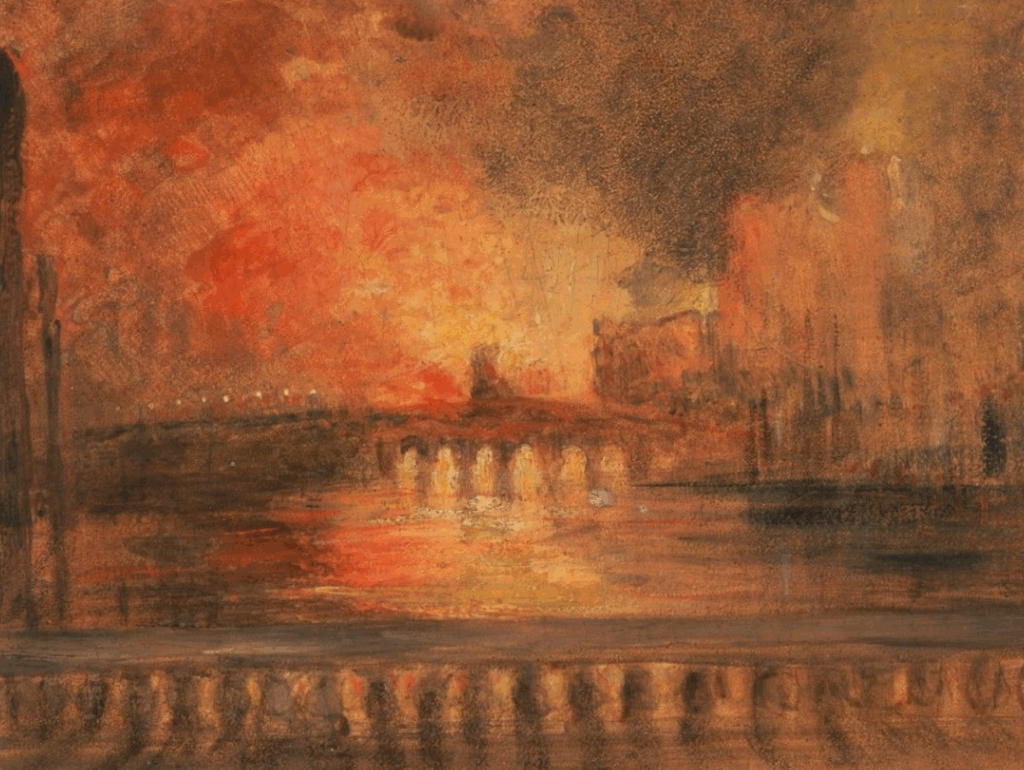
Unknown artist
The Burning of the Houses of Parliament
About 1834
The fire started by disposing old tally sticks in basement stoves and was a popular topic for painters at the time. William Turner, who this painting was previously attributed to, painted 2 canvases of the fire.
There is a lot of tension in this image, the ominous glow in the distance casting shadows onto the bridge. Distanced from the crowded blaze, could this artist have chosen anonymity?
Though the anonymous artists are gone, a part of them lives on through their creations. While we might not remember who they were, could their art be evidence of their existence?
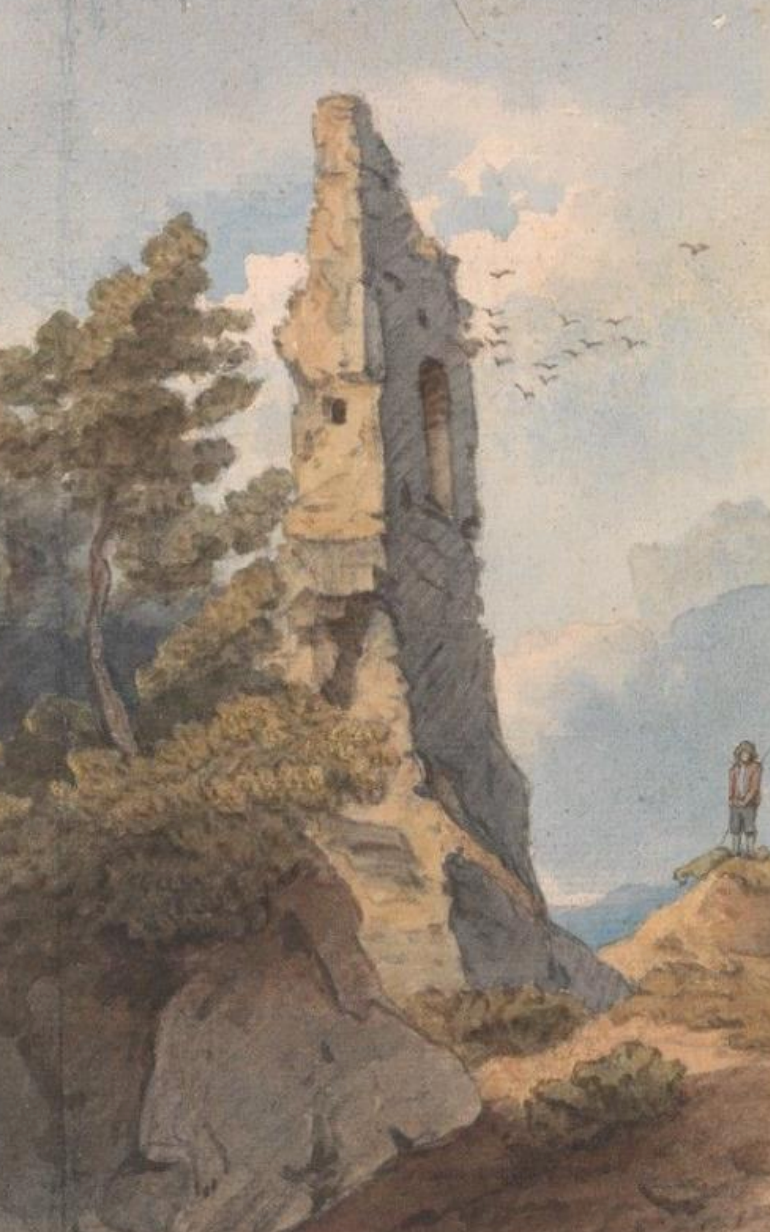
Unknown artist
Bramber Castle
Between 1824 and 1835
“Bramber is a decayed village in Sussex, which contains no other mark of its ancient importance than its ruined Castle”
Alexander Gunn, 1872
Bramber Castle began sinking into the earth in the 1500s. The tower pictured was once a symbol to display the power of the Braose family, who owned it.
Accompanied by a dog, the figure on the right appears to explore the ruins. Bright watercolours suggesting joy and connection with neglected places.
Like the remains of the tower is what is left of the Braose family, this painting is what is left of the artist.
Timbs, J., and Gunn, A., 1872. ‘Abbeys, castles, and ancient halls of England and Wales; their legendary lore and popular history.’ (https://archive.org/details/abbeyscastlesa01timb/page/363/mode/1up)

Unknown artist
Stonemasons, County Durham, England with Memorial Cross Erected in Burnmoor Church
Before 1873
The cross was commissioned by the Earl of Durham to remember his wife, Beatrix Frances Lambton, Countess of Durham, who died unexpectedly in 1871 at only 35 years old.
Does this photograph of the memorial cross immortalise the artist along with the Countess, or emphasise how the artist remains forgotten?
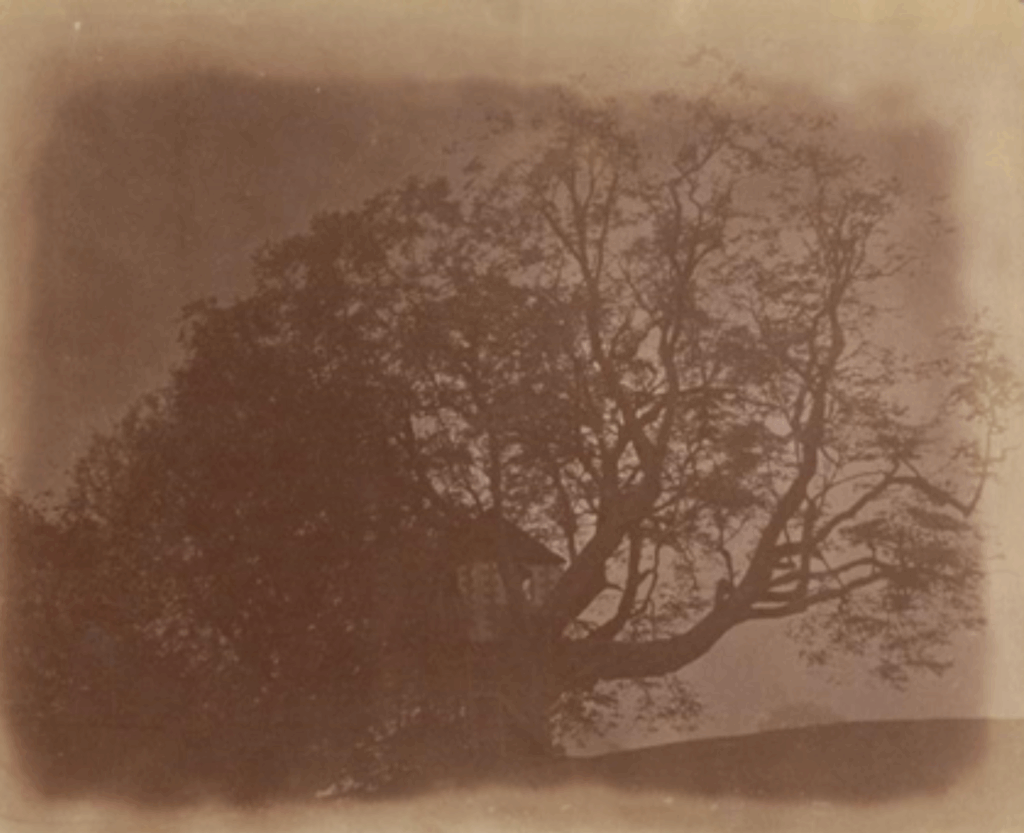
Unknown artist
Treehouse
About 1860
Half-hidden amongst the branches, this treehouse may be disguising a rich history.
It looks very similar to the treehouse at Pitchford Hall, which is believed to be the world’s oldest standing treehouse.
Despite this heritage, the artist remains unknown. The photograph has become an artifact, a window to the past. Could the artist have hidden behind their anonymity like the treehouse hides within the tree?

Unknown artist
Old Cottages
1800
These cottages appear as a shadow of themselves due to the greywash technique of diluting ink with water.
Handwritten in the bottom right corner is,
“Drawn in 1800
Part blown the rest pulled down in September
Or January 1802.”
By recording these now-demolished homes, they have become a lasting record of the artist’s presence too. While these houses, the people that lived there, and the artist that drew them may have all disappeared; by viewing this artwork, we keep their memory alive.
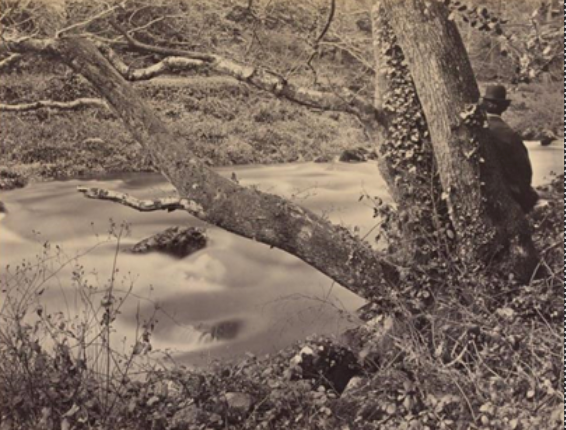
Unknown artist
In the Devil’s Glen, County Wicklow
About 1870
Before the nearby reservoir was completed in 1863, the roar of the water through Devil’s Glen forest was said to sound like a “Satanic power announcing some great doom.”
Carrying the large 1800s camera up the trail wouldn’t have been easy. And due to the long exposure needed for photography at the time, the water appears like a mist and the figure on the right would’ve had to stay very still to not blur the image.
With their back to us, could this person be a stand-in for the anonymous artist?
Without a name, people can feel free from judgement. Their art becomes a diary entry others can investigate and engage with.

Unknown artist
Poppies and Tradascanthus
About 1800
In the Victorian era there was societal pressure to keep your emotions contained, so people used flowers to subtly communicate with each other.
Contrary to the title, the blue flower looks more like morning glory. Poppies meant ‘sleep’ and ‘consolation’, whereas morning glory meant ‘affectation’ (faking).
Perhaps this means the artist was tired of pretending?
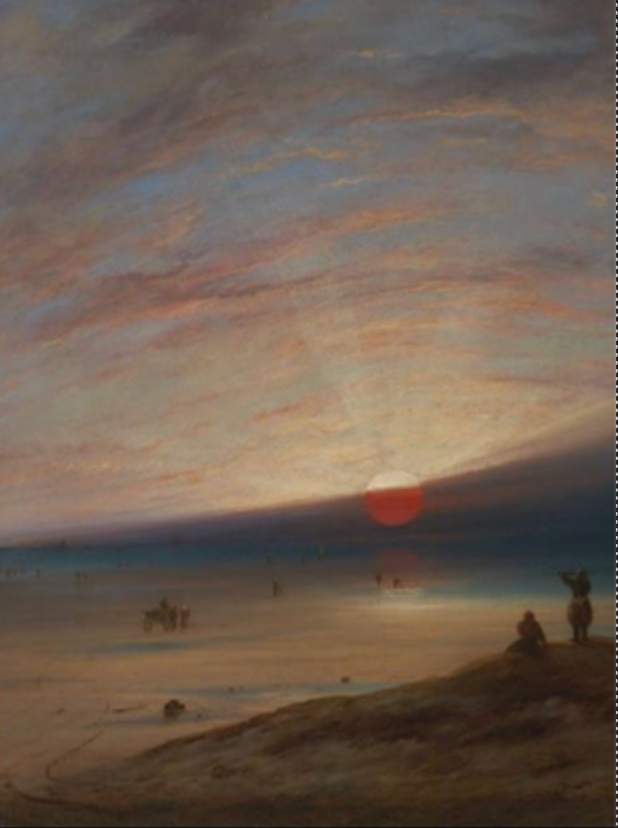
Unknown artist
Sunset on the Beach at Sark
About 1850
The sun is obscured like the artists identity, creating silhouetted figures the viewer can imagine themself as.
The mystery of the unknown artist works well for the folklore-rich island of Sark, where until the 1900s, most of the islanders believed in Pouquelayes, mischievous pixies with detachable heads who smoked pipes.
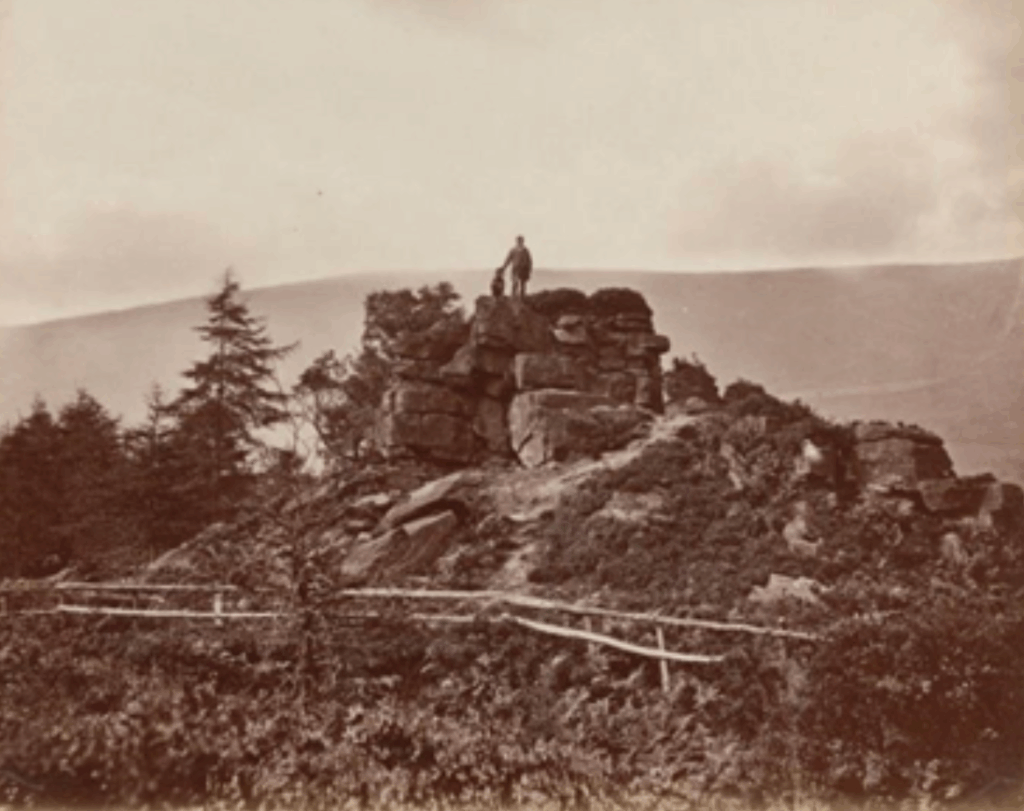
Unknown artist
Two Figures on Rock Outcrop, Derbyshire
1870s
The taller figure is smartly dressed, with a hand on the head of the smaller figure in a fatherly way, perhaps this was a family photograph.
Derbyshire was a popular destination for geologists at this time, its limestone cliffs preserving fossils 350 million years old.
Could the figures’ position at the top of this stone podium suggest a sense of pride or accomplishment? Are the histories and fossils this family may have been uncovering that different to how we look back at their anonymous photograph?
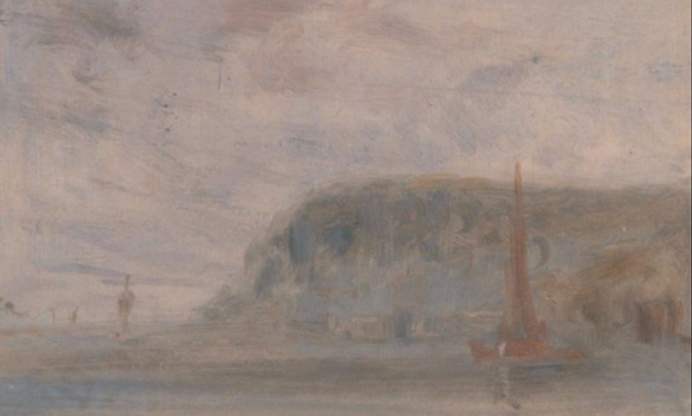
Unknown artist
Coast with Cliffs and Boats
Early 1800s
The boat in the foreground looks very similar to the Thames sailing barges that were common throughout the 1800s. Known for their red sails, these cargo boats would go as far as continental ports. This provides an atmospheric view of the coastal industry at that time.
Like with ?Petit Andeleys on the Seine, this work has a history of misidentification. Originally credited to William Turner and later to Peter DeWint. Now, the artist is simply unknown.
Did our unknown artist paint in this style because they admired Turner and DeWint, or did they just think that’s what people would want?
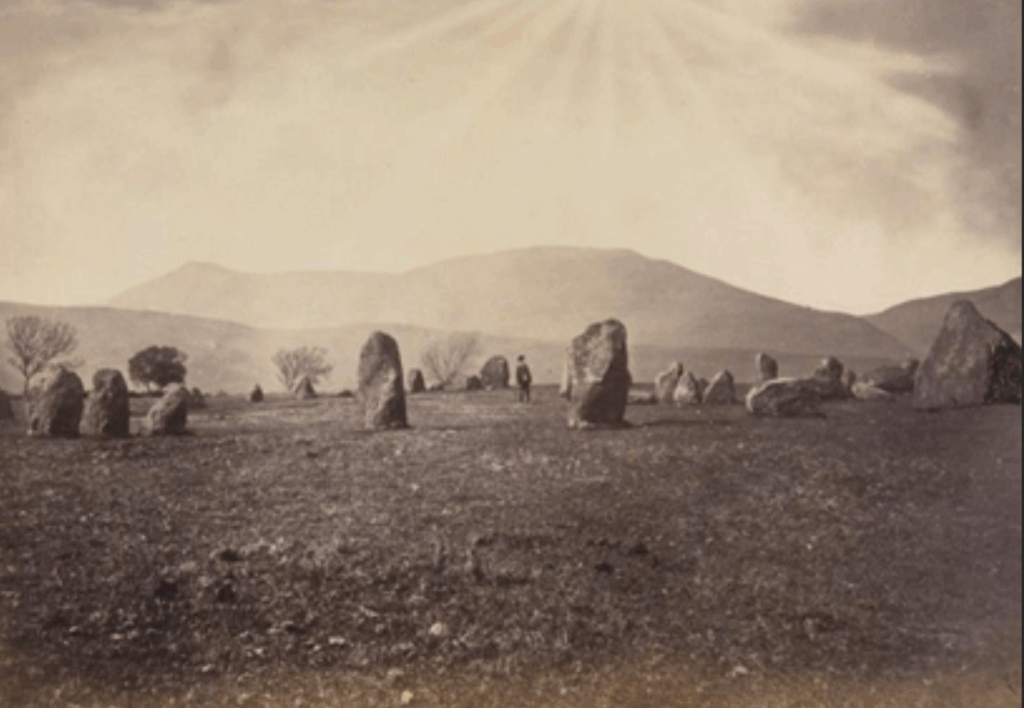
Unknown artist
The Druids’ Circle, Castlerigg, Keswick
About 1880
Within the circle of stones, this lone figure stands anonymous.
Castlerigg Stone Circle became a protected site in 1882 after tourists kept chipping away bits of rock as souvenirs.
Maybe anonymity felt safer to this artist? Like the surrounded figure, they may have felt observed. This photograph seems a much more considerate souvenir, a way to turn our attention to the stones that have stood watch for 5,000 years.
There are many reasons artwork can end up anonymous. Names can be worn off, lost, purposefully removed, or were never added in the first place. Maybe they were made anonymous due to gender, class, race, or religion. How did these private works become public? Were they found in an attic or sold at auction?
The three main questions we leave you with are:
Who is art for?
Does it matter that you’re not recognised?
Is it enough to have expressed yourself even without being credited?
In today’s age of the Internet, anonymity feels like a novelty of the past. Share your thoughts on the exhibition here and exercise your anonymous voice.

Why Anonymity Matters?
“In the anonymous blank space, what do you see – art, or yourself?”
Copyright information
All art collections are from the Yale Centre For British Art.
https://britishart.yale.edu/
Image list:
Unknown artist, Advertisement for ‘List of New Prints and Engraved Works published by W.B. Cooke 9 Soho Square’, 1815 to 1823, Letterpress, Yale Center for British Art, Paul Mellon Collection, B1977.14.8484d.
Unknown artist, ?Petit Andeleys on the Seine, 1822 to 1825, Oil on paper, Yale Center for British Art, Paul Mellon Collection, B2001.2.40.
Unknown artist, Toll Houses on Bristol Bridge, 1845, Daguerreotype, quarter plate on polished silver in period gilt frame passe-partout, Yale Center for British Art, Paul Mellon Fund, B2018.20.8.
Unknown artist, The Burning of the Houses of Parliament, ca. 1834, Oil on panel, Yale Center for British Art, Paul Mellon Collection, B2001.2.54.
Unknown artist, In the Devil’s Glen, County Wicklow, ca. 1870, Albumen print from wet collodion negative on thin, smooth, cream wove paper, Yale Center for British Art, Gift of Charles Isaacs and Carol Nigro, B2018.7.18.
Unknown artist, Old Cottages, 1800, Gray wash and graphite on medium, slightly textured, cream wove paper, Yale Center for British Art, Paul Mellon Collection, B1975.4.1109.
Unknown artist, Stonemasons, County Durham, England with Memorial Cross Erected in Burnmoor Church, before 1868, Albumen print from wet collodion negative on thin, smooth, cream wove paper, Yale Center for British Art, Gift of Charles Isaacs and Carol Nigro, B2018.7.109.
Unknown artist, Bramber Castle, between 1824 and 1835, Watercolor over graphite on moderately thick, moderately textured, cream wove paper, Yale Center for British Art, Paul Mellon Collection, B1977.14.5805.
Unknown artist, Treehouse, ca. 1860, Albumen print from wet collodion negative on thin, smooth, cream wove paper, Yale Center for British Art, Gift of Dr. and Mrs. Charles T. Isaacs, B2018.3.12.
Unknown artist, Poppies and Tradascanthus, ca. 1800, Oil on paper, Yale Center for British Art, Paul Mellon Collection, B1981.25.12.
Unknown artist, Coast with Cliffs and Boats, early 19th century, Oil on paper, Yale Center for British Art, Paul Mellon Collection, B2001.2.43.
Unknown artist, Sunset on the Beach at Sark, ca. 1850, Oil on canvas, Yale Center for British Art, Paul Mellon Collection, B1981.25.198.
Unknown artist, The Druids’ Circle, Castlerigg, Keswick, ca. 1880, Albumen print from glass negative on thin, smooth, cream wove paper, Yale Center for British Art, Gift of Charles Isaacs and Carol Nigro, B2018.7.112.
Unknown artist, Two Figures on Rock Outcrop, Derbyshire, 1870s, Albumen print from wet collodion negative on thin, smooth, cream wove paper, Yale Center for British Art, Gift of Dr. and Mrs. Charles T. Isaacs, B2018.3.13.
Thank you for visiting the exhibition
All works in Anonymous Voices: The Art of the Unseen have been sourced from the Yale Center for British Art’s collection. Curated by Xuedan Huang, Emma Williamson, and Minyoung Song.