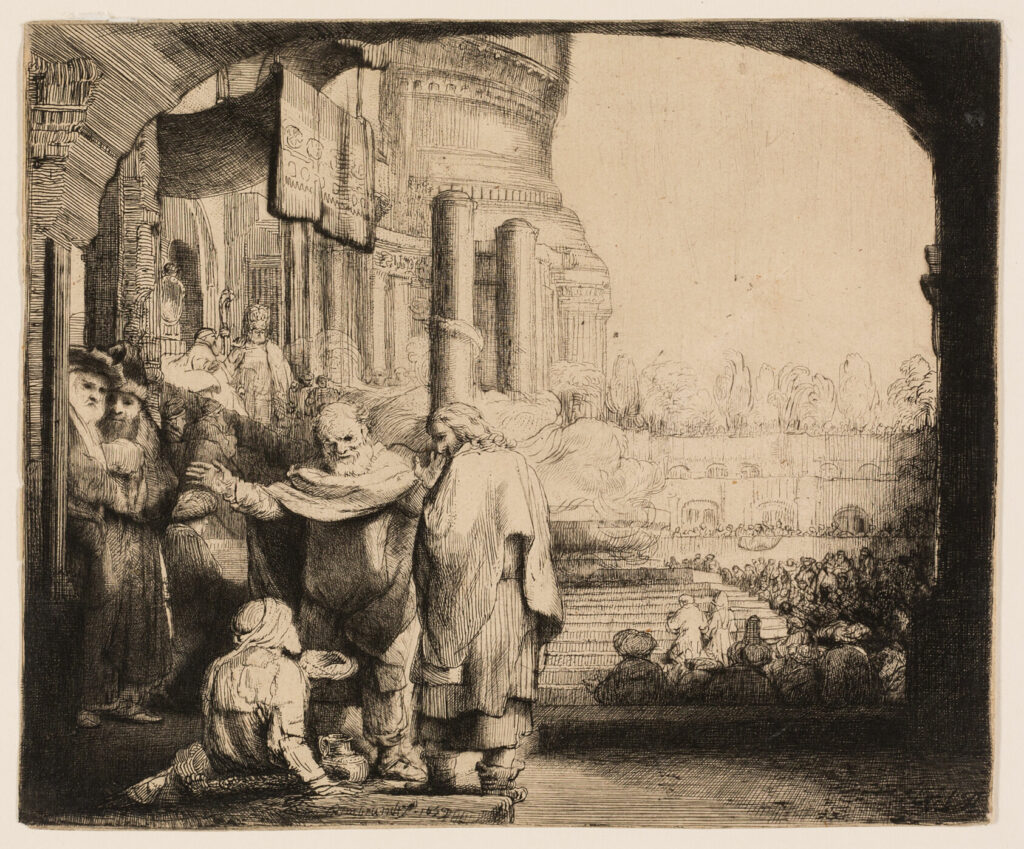
Peter and St. John Healing the Cripple at the Gate of the Temple
Rembrandt van Rijn
1659
Healing unfolds here, yet distance remains unmistakable. The apostles stand higher, while the beggar must look up. Position and status draw a quiet boundary between them. In this moment of “miracle,” do you see compassion reaching across the gap, or a limit shaped by power that keeps true contact apart?
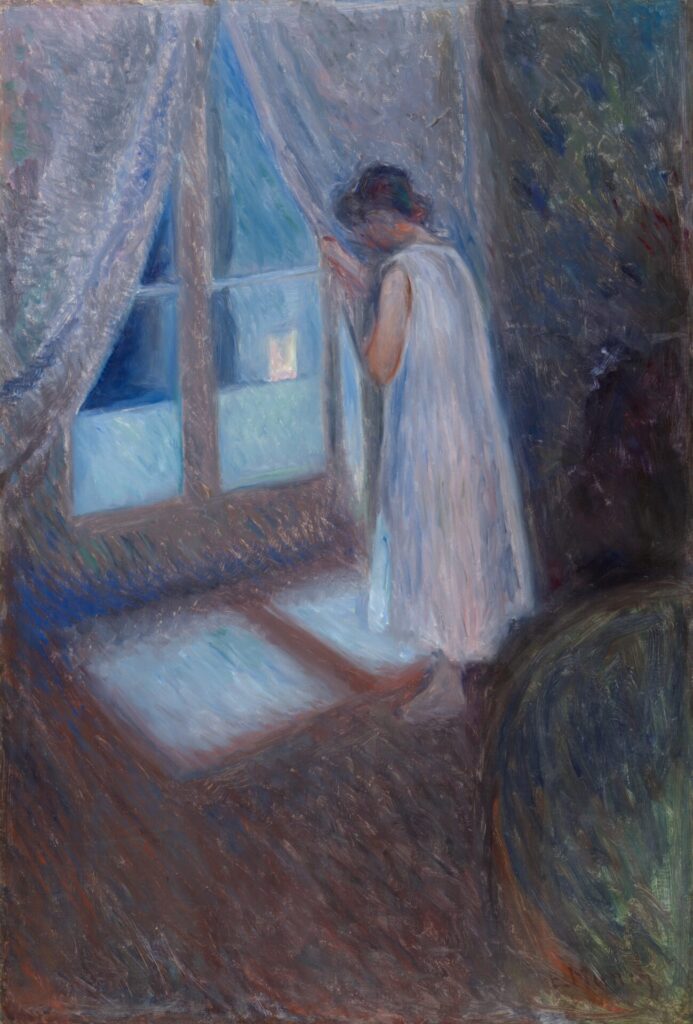
Young Woman at a Window
Edvard Munch
1893
A girl stands at a window. Her body remains in the dark room, but her gaze reaches past the frame toward water and city lights outside. Furniture and walls wrap around her like a small box—safe, but also closed. Outside seems open and moving; inside stands for a planned, fixed life and identity. Is she enjoying the quiet of the room, or caught by a visible but un-crossable boundary?
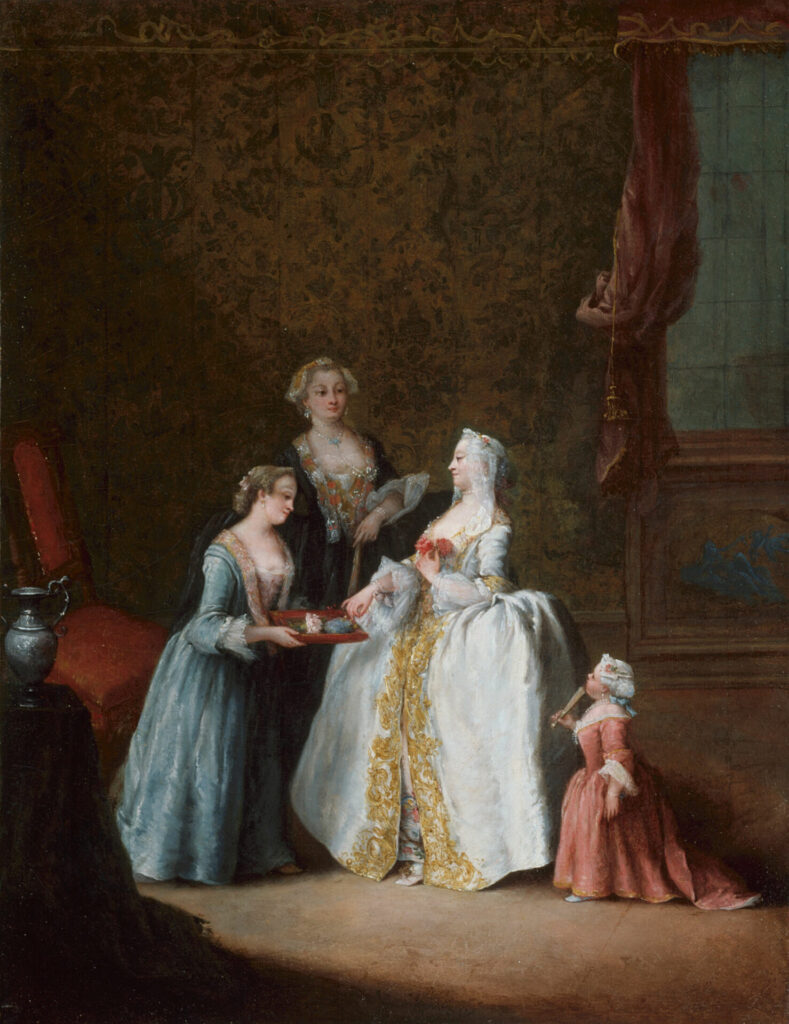
Lady at Her Toilette
Pietro Longhi
Late 1740s
A richly dressed woman sits at her dressing table, fixing her hair and jewelry before the mirror. Her appearance and the elegant room highlight her status, while the nearly unseen servants make this daily ritual possible. The mirror acts like a small stage, displaying “good manners” and class. So is this a picture of personal beauty, or a gendered and class-bound role performed repeatedly?
Copyright information:
–Peter and St. John Healing the Cripple at the Gate of the Temple, Rembrandt van Rijn, 1659. Given in memory of John V. Farwell by Hermon Dunlap Smith, from the Art Institute of Chicago. CC0. Reference Number 1945.46.
–Young Woman at a Window, Edvard Munch, 1893. Searle Family Trust and Goldabelle McComb Finn endowments; Charles H. and Mary F.S. Worcester Collection, from the Art Institute of Chicago. CC0. Reference Number 2000.50.
–Lady at Her Toilette, Pietro Longhi, Late 1740s. Flora Erskine Miles Fund, from the Art Institute of Chicago. CC0. Reference Number 1947.433.