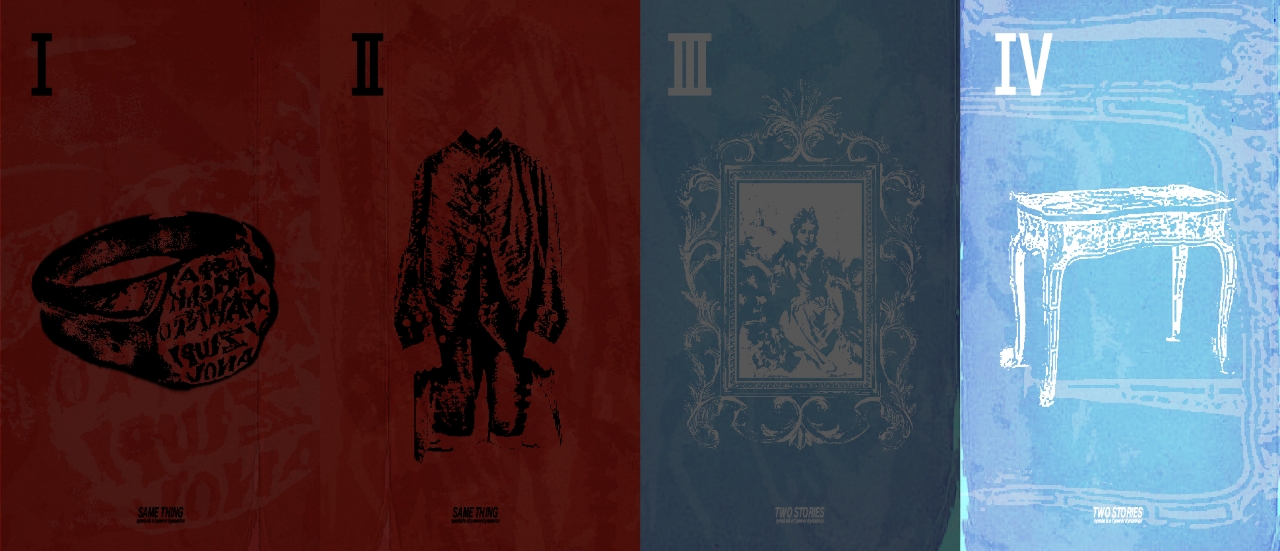
Same Thing, Two Stories: Symbols of Power Dynamics
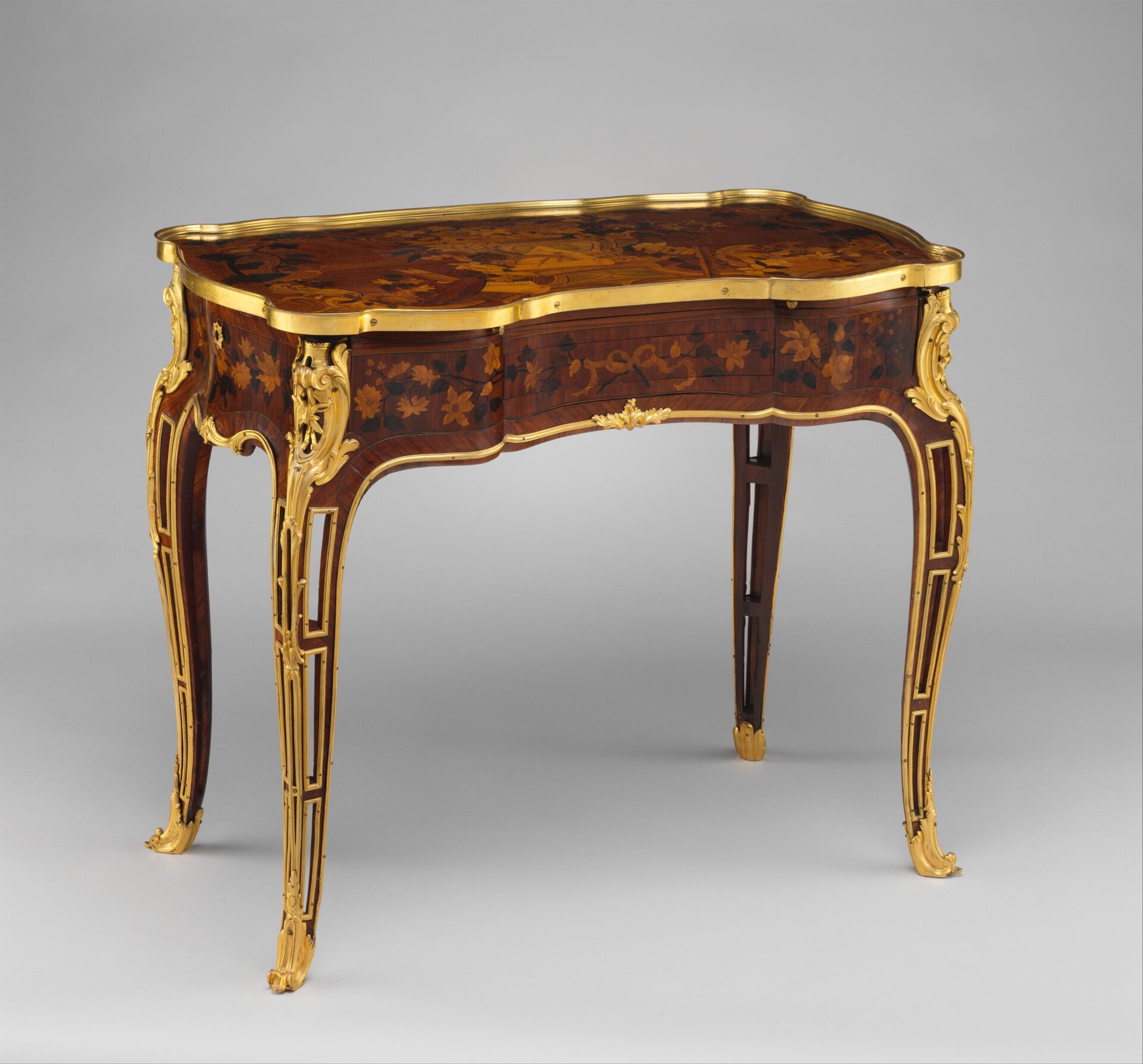
Mechanical table
Jean-François Oeben and Roger Vandercruse
1761–63
Oak veneered with mahogany, kingwood, and tulipwood, with marquetry of mahogany, rosewood, holly, and various other woods; gilt-bronze mounts; imitation Japanese lacquer; replaced silk.
Marked with CC0 1.0
This is a piece of Rococo furniture originally owned by the ‘duchesse-marquise de Pompadour’, mistress of King Louis XV of France. This piece of furniture is extremely luxurious in its craftsmanship and very sophisticated in its design.
Variety of precious woods, silks, and metals for the materials, the use of complex artistic and sculptural techniques for the visual elements, and the use of intricate and rarely seen mechanisms for the design and finishing of the design. The well skilled court craftsman even engraved allegorical trophies to set off her interest,namely architecture, music, painting, gardening, those interest has huge barriers of entry to the public during that stage of history . Those features not only demonstrate the high exchange value of material and crafting, further more, Its value is reflected in the fact that its craft and design are highly customized art forms for nobles in the context of imperial autocracy (analysis based on Social context).
The gilt-bronze inlaid and etched legs are of particular interest, where the family coat of arms and the ducal coronet are engraved, This design perfectly illustrated monarchy power in a symbolic display. Based on this visual engagement, it could be a evidence to reflect that ownership of this type of work has been related with exclusive privilege (based on symbolism).
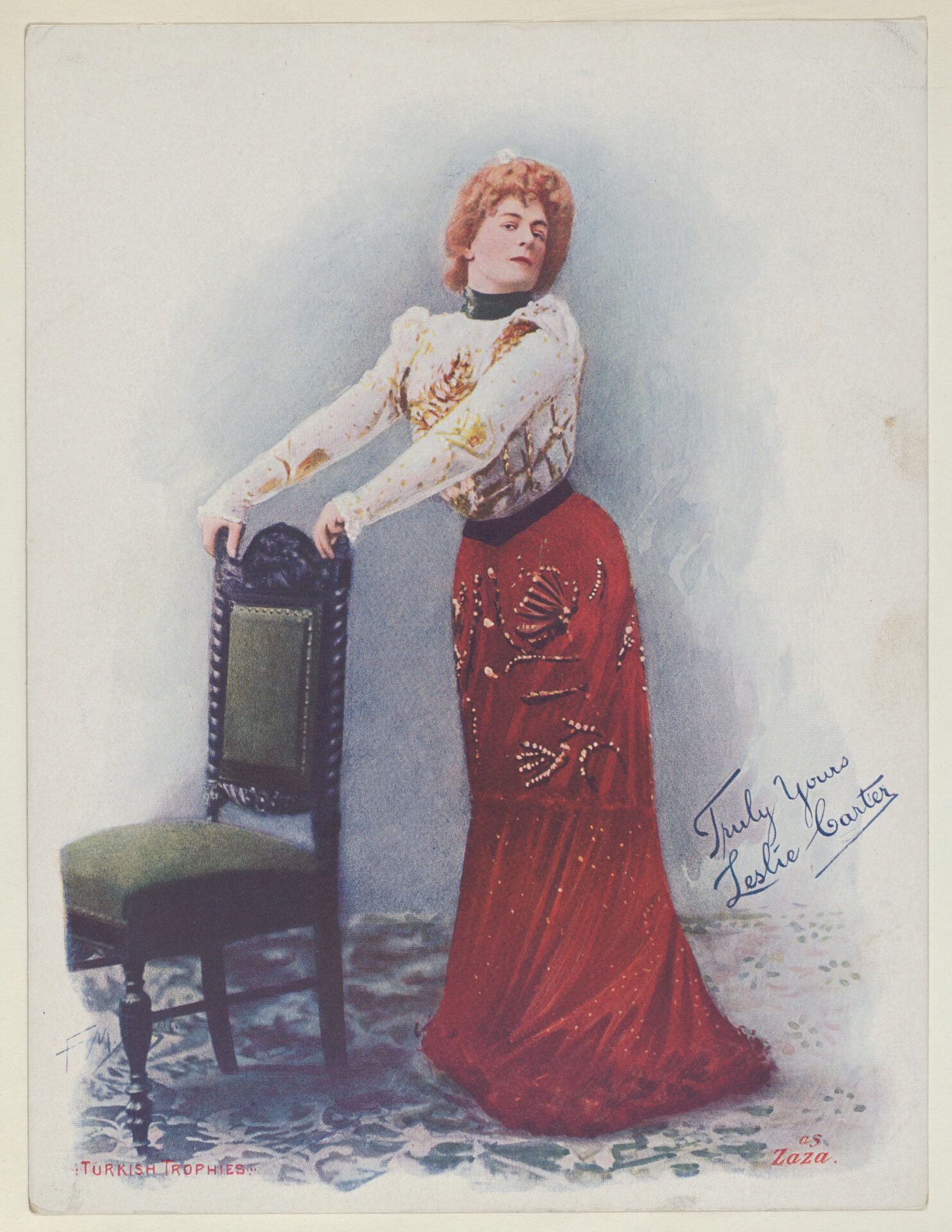
Leslie Carter as Zaza, from the Actresses series (T1), distributed by the American Tobacco Co. to promote Turkish Trophies Cigarettes
Commercial color lithograph
1900
Marked with CC0 1.0
This painting is an advertisement from the series “Actresses” released by the American Tobacco Company in 1900. In this painting, we can see that the chair gradually becomes a prop in the picture, and the woman becomes the visual center. From the name of this work, we also know that this woman has the power to work and shows her confidence.
With thanks to The Metropolitan Museum of Art