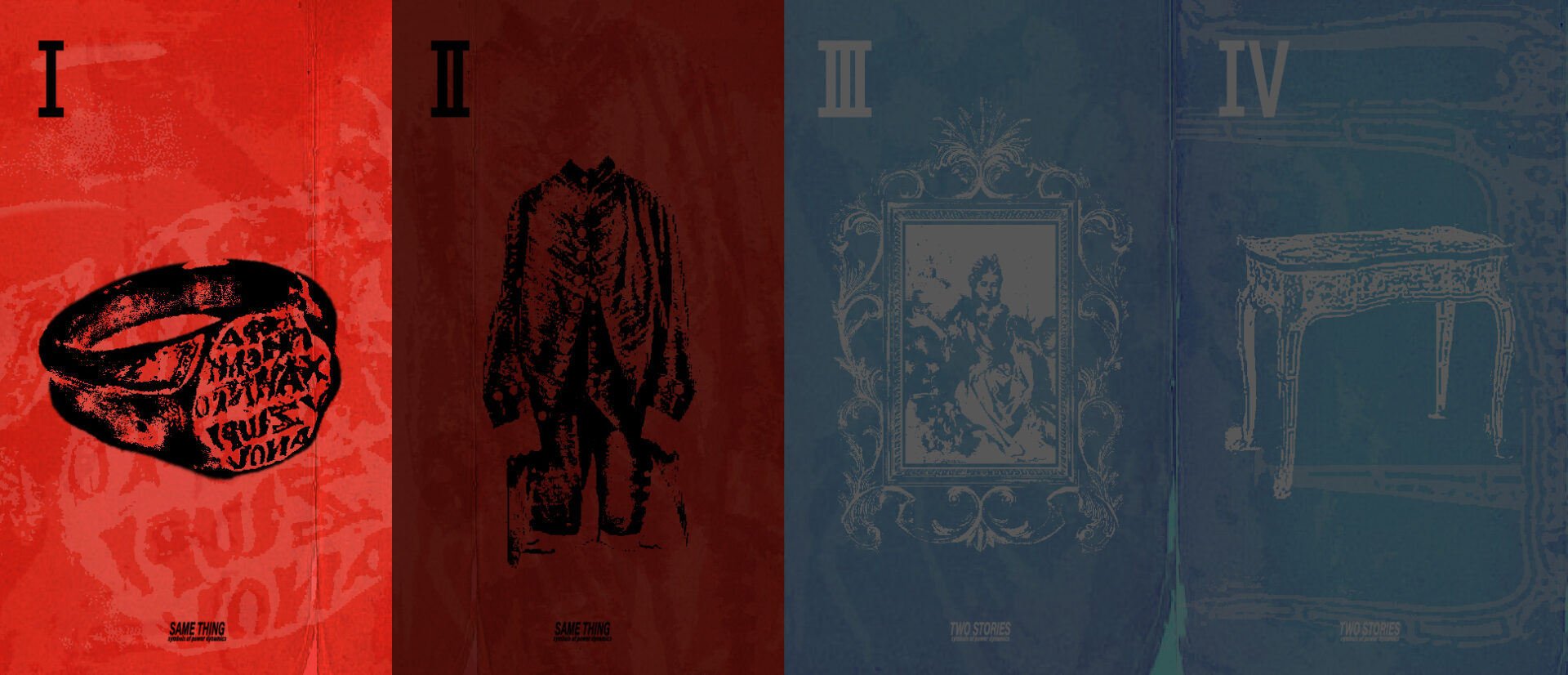
Same Thing, Two Stories: Symbols of Power Dynamics
Portrait of Pope Sixtus V
Date: 1585
Artist: Pietro Facchetti (Italian, Mantua 1535–1619 Rome)
Sitter: Pope Sixtus V (Felice Peretti) (Italian, Grottamare near Pescara 1520–1590 Rome)
License: “Portrait of Pope Sixtus V” by Pietro Facchetti is marked with CC0 1.0.
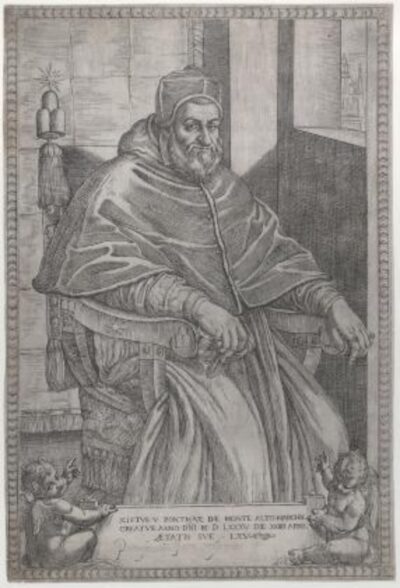
This is a portrait painting of Pope Sixtus V from 1585.
We can clearly see the signet ring being worn on his hand.
As a symbol of power, identity, and authority, signet rings have been used as family emblems or religious symbols since ancient Egypt. In ancient Rome, nobles, merchants, and officials used them to stamp wax seals to confirm the authenticity of documents.

In the Middle Ages in Europe, signet rings were extremely important in the church. The Pope's Ring of the Fisherman was a famous signet ring of this period, symbolizing the authority of the Pope.

However, in the 19th century, even under the influence of liberalism, signet rings still symbolized the cruelty of war and colonization behind them, as well as the tragic ending of the invincible struggle between personal destiny and the will of national power.
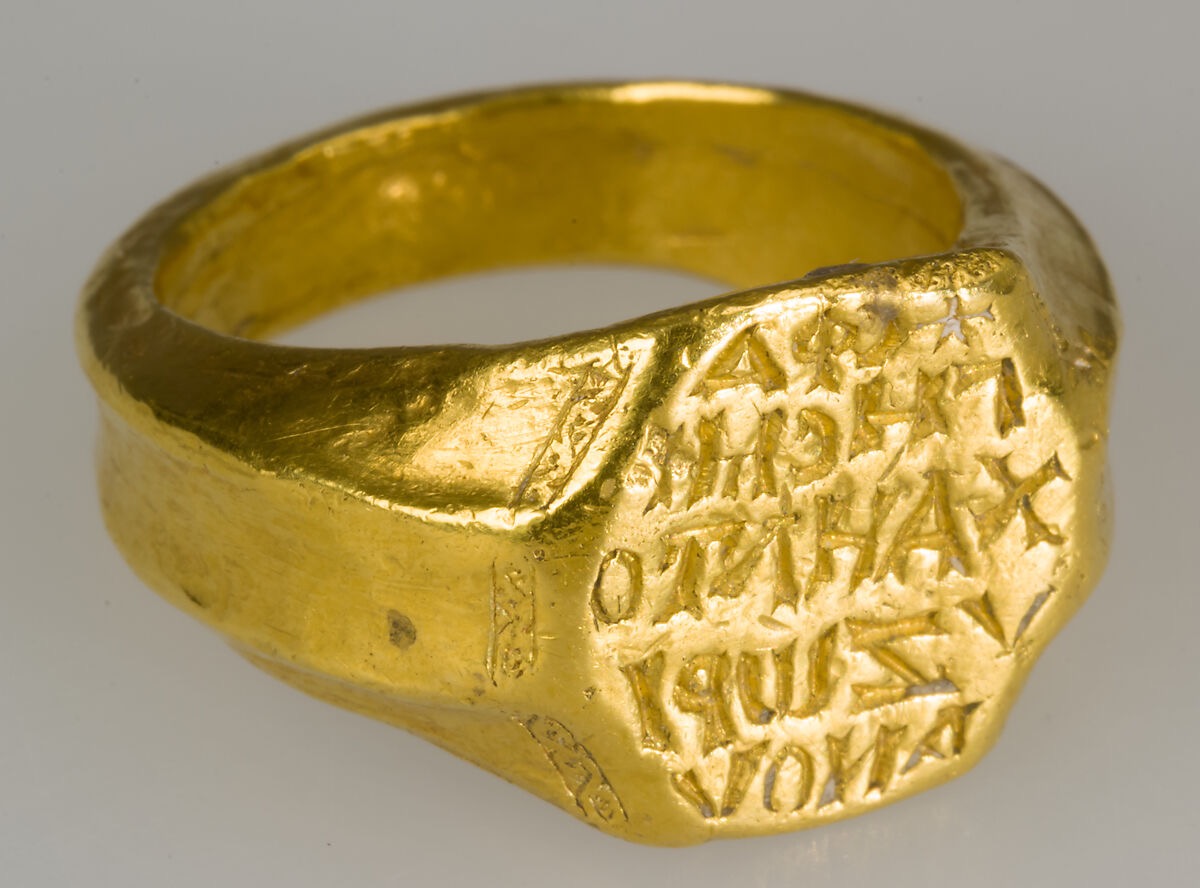
Gold Signet Ring of Michael Zorianos
ca. 1300
Gold
Marked with CC0 1.0
This ring comes from an official named Michael Zorianos during the Byzantine Empire 1,300 years ago. It is his most famous relic. This ring shows the exquisite carving technology of the Byzantine period. The inscriptions and decorations on the ring reflect the noble status and political power of this official. They usually use this ring to seal or sign documents. Through this ring, we can understand noble identity authentication and the operation of the state system in the Byzantine period.
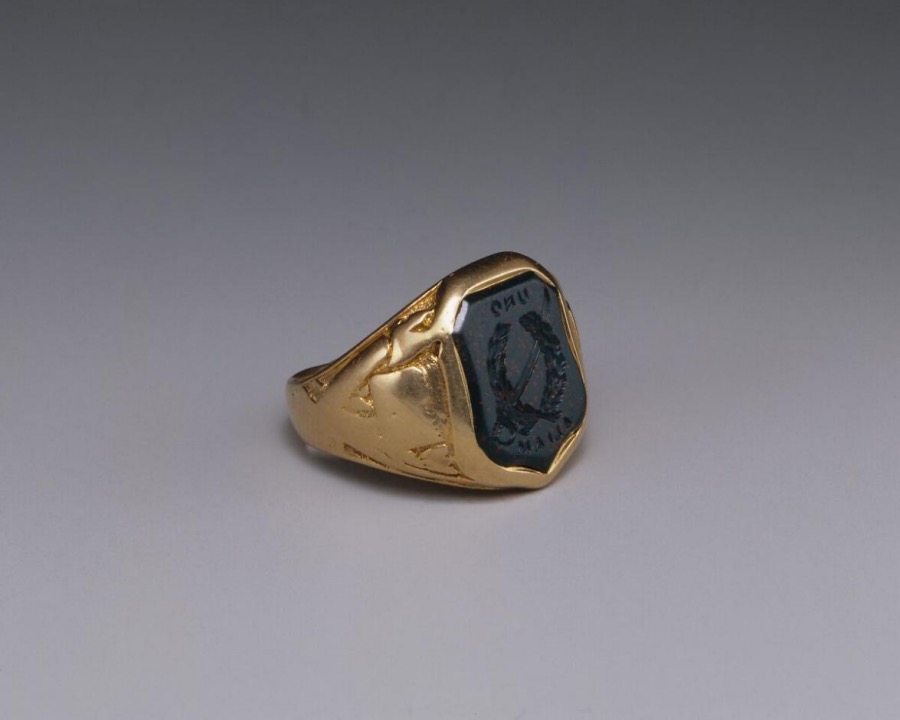
Signet Ring
1864
Gold and Bloodstone
Marked with CC0 1.0
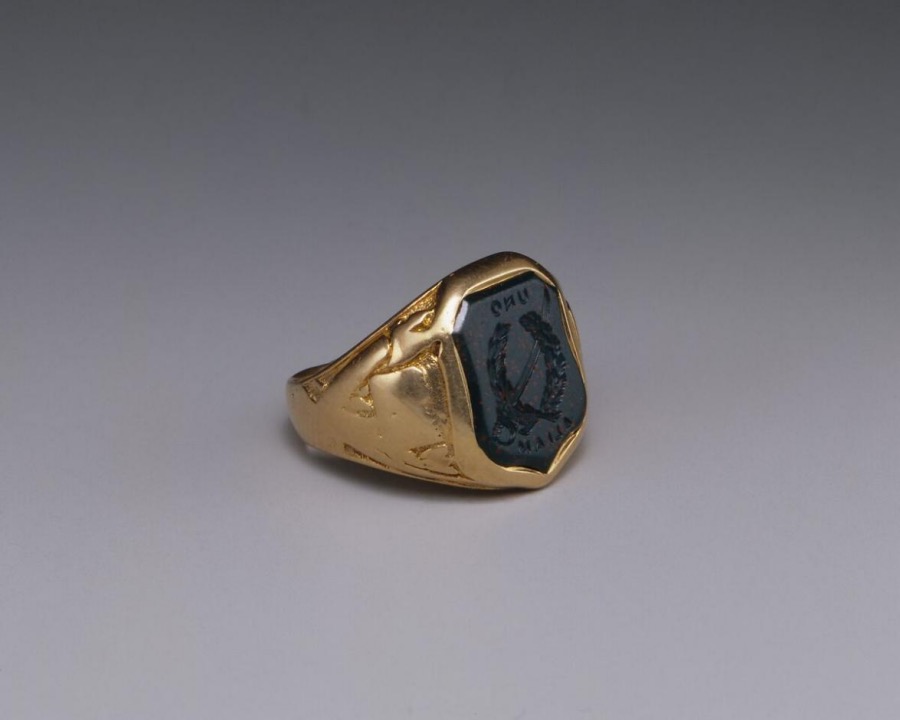
This ring once belonged to John K. Elliott, who purchased it when he graduated from the United States Military Academy in 1864. This graduation ring was made by Ball, Black & Co., a famous jeweler in New York City. The ring is engraved with crossed laurel wreaths and swords, and the motto of the Class of 1864, “Uno Aliam”. The engraving of the pattern and motto allows the stone to be used as a seal. The shoulder of the ring is worn from use and has a military trophy on it. Sadly, the owner of this ring died at the age of 29 from complications of injuries he received during the Civil War.
With thanks to The Metropolitan Museum of Art