The Flight Attendant’s Wardrobe
The 20th century was a time of rapid development in the aviation industry and a period of continuous evolution for flight attendant fashion. Here, we will take you on a journey through time to explore the fascinating story of the evolution of airline uniforms. This is a series of new sketches inspired by the clothes from the Smithsonian Institution collection. From the simple and practical designs of the early 20th century to the fashion-forward styles of the late century, flight attendant uniforms are not only witnesses to the growth of the aviation industry but also a reflection of culture and women’s status.

Flight attendant uniforms evolved from their initial functional designs to become an integral part of an airline's brand image. This display features a curated selection of iconic flight attendant uniforms from various periods and introduces you to some of the women who wore them.
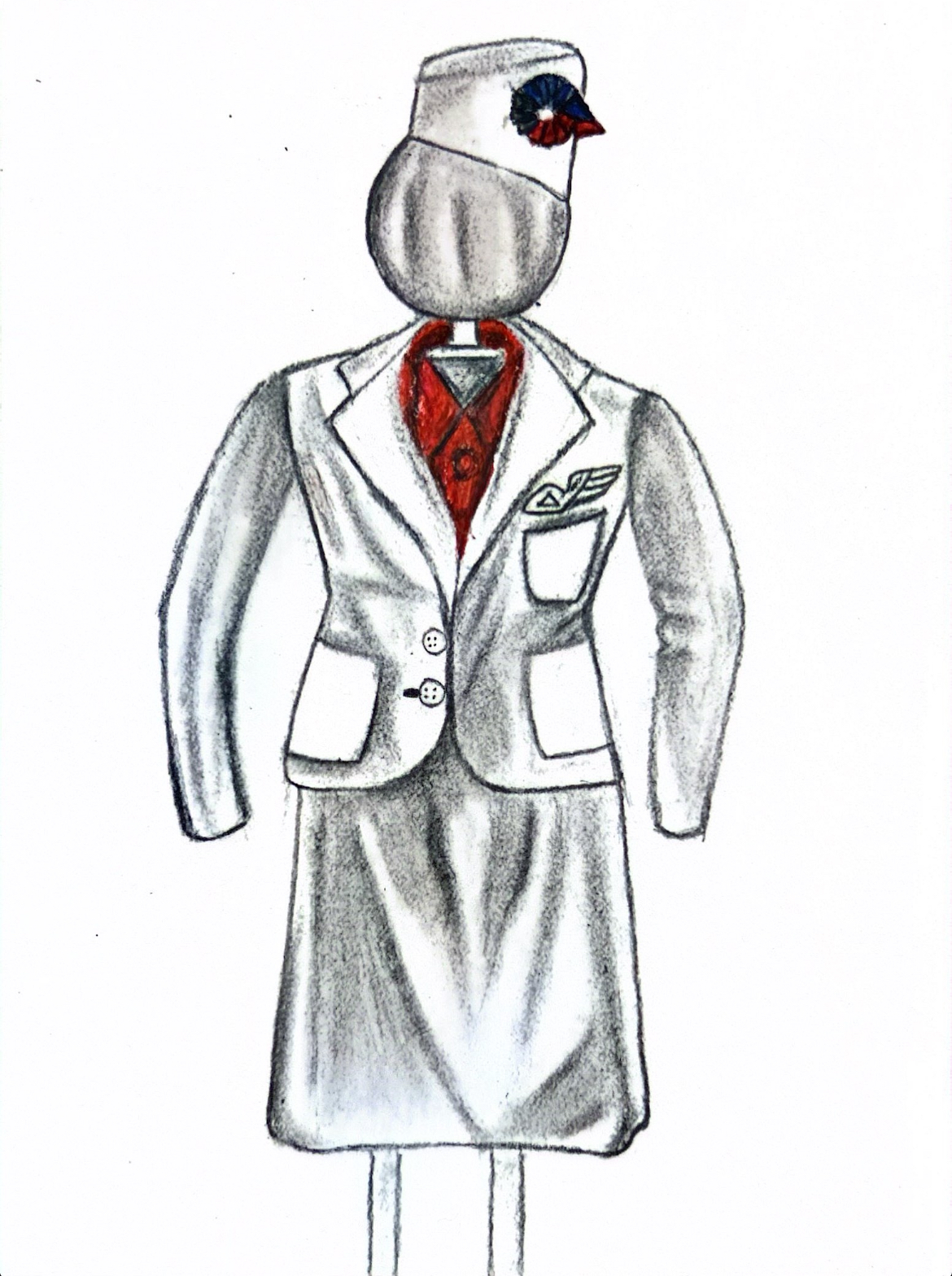
Inspired by Coat, Stewardess, Transcontinental and Western Air | National Air and Space Museum
Thelma Jean Harman Uniform
This cream-colored flight attendant belonged to Thelma Jean Harman. Made of organic fabric with a metal badge, the uniform showcases the clothing design and craftsmanship of the 1930s.
The badge, added later, brings a professional and official touch to the uniform.
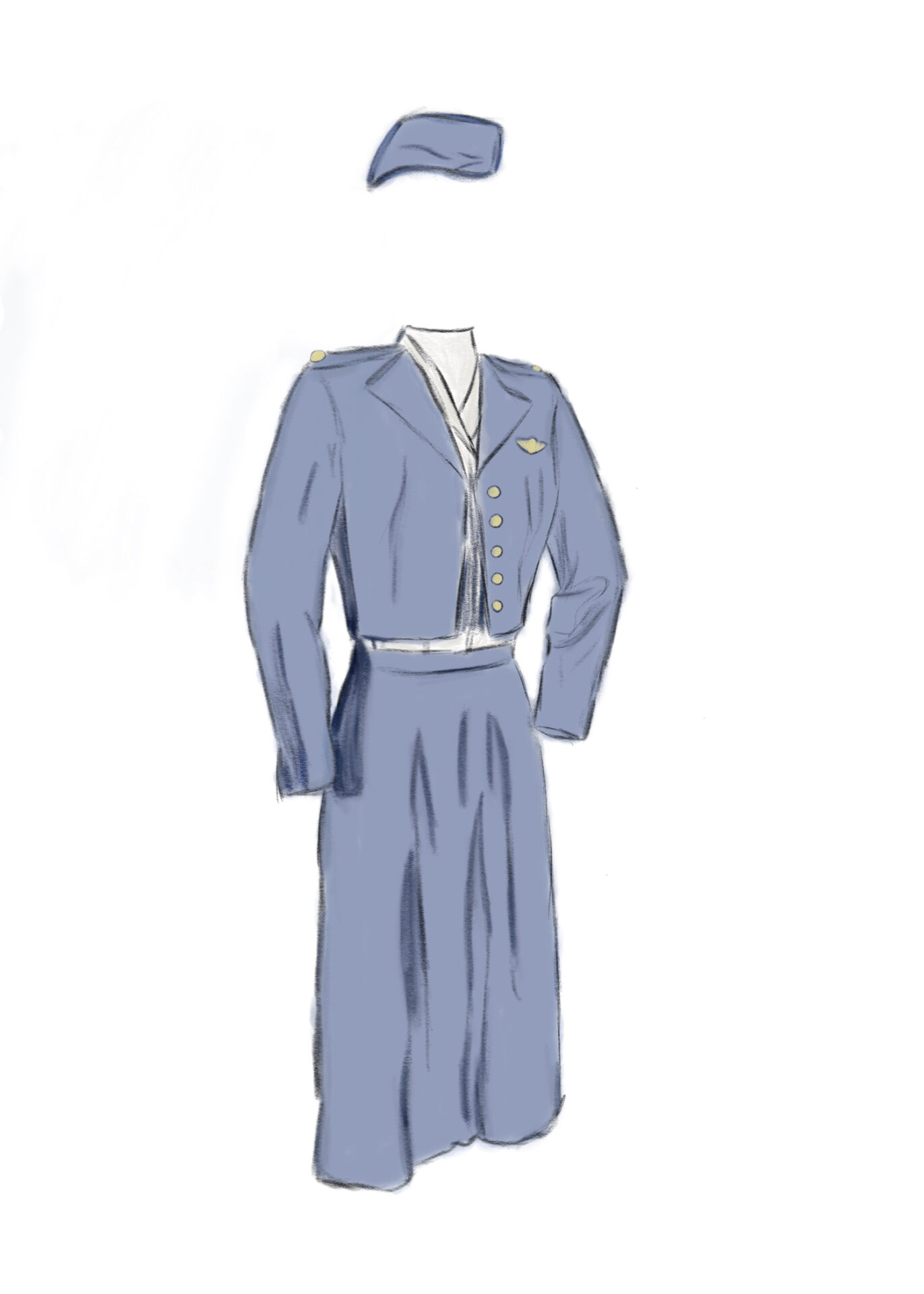
Inspired by Flight Attendant Uniform, Capital Airlines, 1955 | National Air and Space Museum
Marcy Wetherbee Uniform
This woolen uniform belonged to flight attendant Marcy Wetherbee who in 1955 served on Capital Airliners’ Vickers Viscount regular passenger flights.
This uniform is more fashion forward than those that came before. We see the introduction of more colour with matching blue-grey jacket, skirt and hat.
If you look closely, you can see the gold insignia branding for Capital Airlines on the uniform.
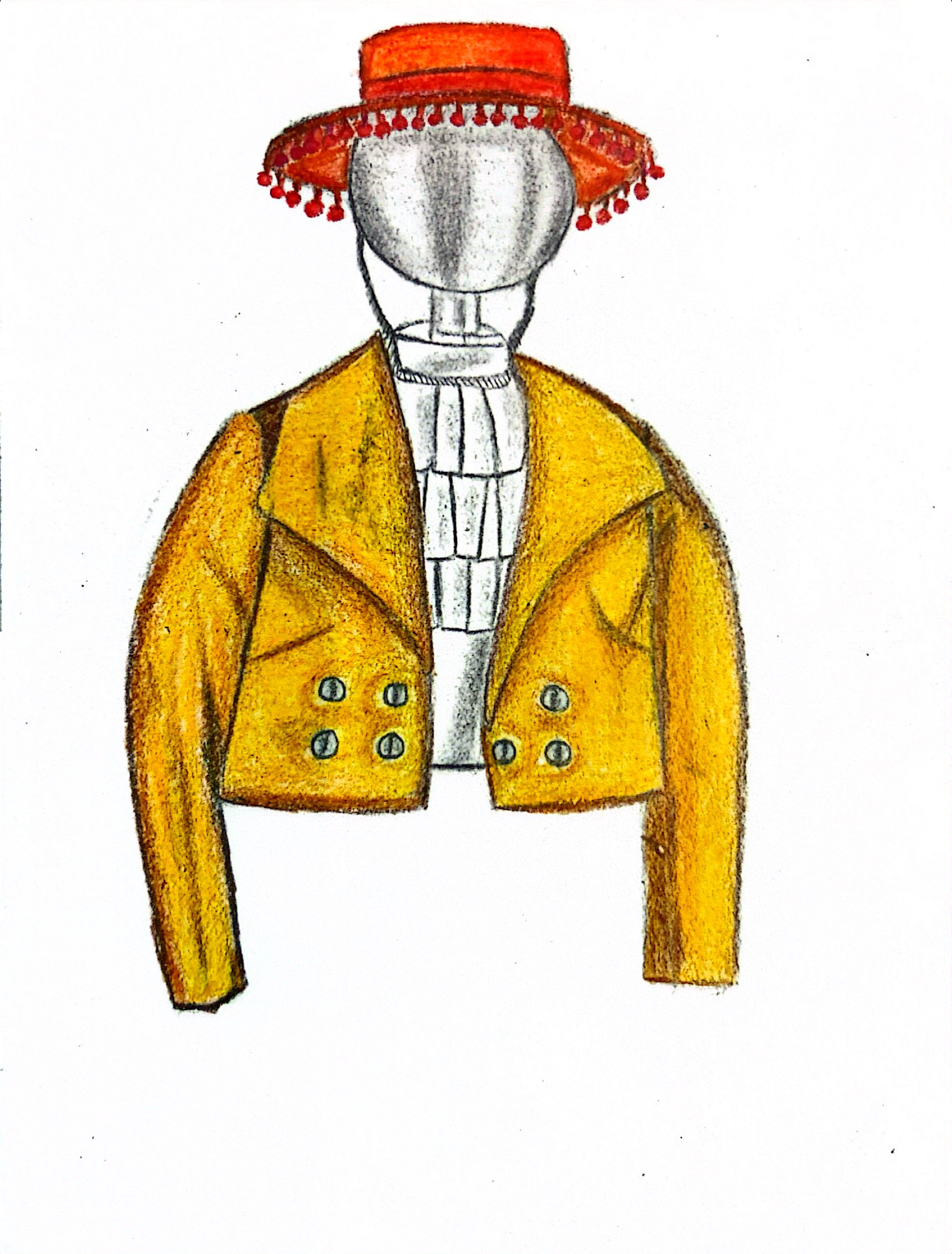
Inspired by Coat, Flight Attendant, Air California | National Air and Space Museum
California Air Uniform
Air California’s uniforms, in the 1960’s drew inspiration from Mexican culture, and were crafted to honour California’s Spanish roots while embracing the stylish flair of the period. They consisted of a sombrero like hat and cape and would have paired them with miniskirts and go-go boots. The vivid orange design highlights the airlines shift towards adopting more colourful uniforms during the 1960’s.
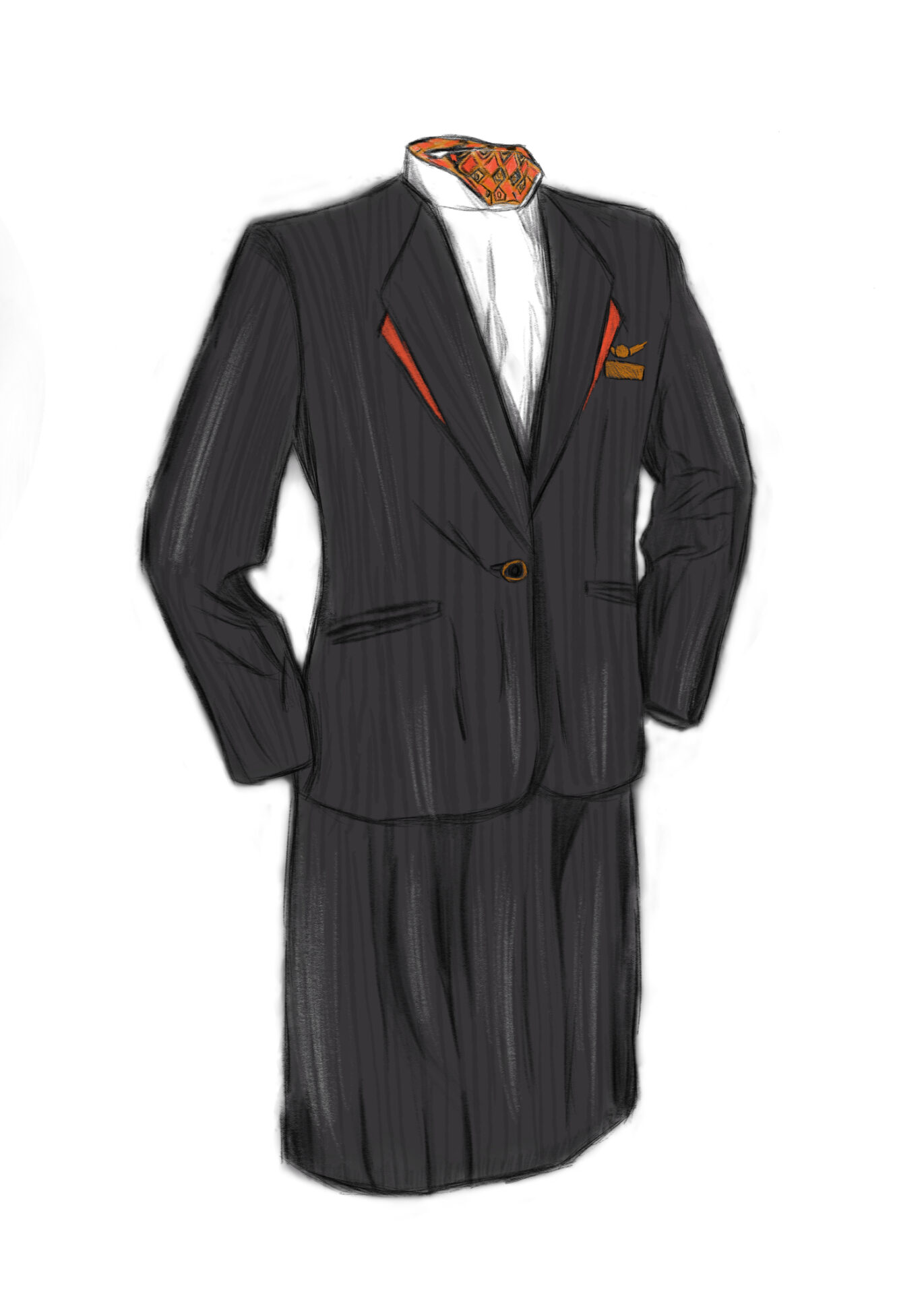
Inspired by Jacket, Flight Attendant, Northwest Airlines | National Air and Space Museum
Tami Tucker Uniform
This smart uniform belonged to Tami Tucker who flew on Northwest Airlines in the late 1990s.
We see here that there is no hat like the past. Instead, there is a polyester scarf in the red, blue and gold pattern of the airline.
Women like Tami wore this Dark Blue herringbone knee-length skirt that would have been clearly different to the men’s outfit.
Although most flight attendants were still women by the end of the century, for the first time there were more men in the profession.

We have traced the flight attendant uniforms throughout the century.
Can you see how the profession’s uniform has changed?
Is there anything that has stayed the same?
AS OTHERS SEE US
MAKE UP FRESH
HAT STRAIGHT
HAIR LENGTH RIGHT
BLOUSE PRESSED
INSIGNIA ON
UNIFORM CLEANED AND PRESSED
SLIP SHOWING
HOSE SEAMS STRAIGHT
SHOES SHINED
Above are words taken from a checklist that was placed alongside a mirror in a flight attendants’ lounge. Below is a link to a photograph of a flight attendant in the 1960’s checking her outfit against this list before starting her shift.
https://airandspace.si.edu/stories/editorial/meet-flight-attendants-who-fought-equality-during-civil-rights-era

By the 1960’s, being a flight attendant was strongly considered a woman’s job. Where one of the main requirements was having an appearance just below Hollywood standards. We see here the long checklist that puts a clear focus on physical appearance. Commercial airlines used flight attendants as a marketing tool for the mostly male customers. Not only did the women have to look a certain way, but the uniforms were designed to accentuate and highlight their looks.
As a group of women, the curators of this exhibition have been considering how this checklist and the phrase ‘AS OTHERS SEE US’ relates to our experience of work and appearance in the 21st Century. We have responded to this by creating our own personal checklists that suggest some of the pressures but also some of the control we feel through our clothing. What might be on your checklist?
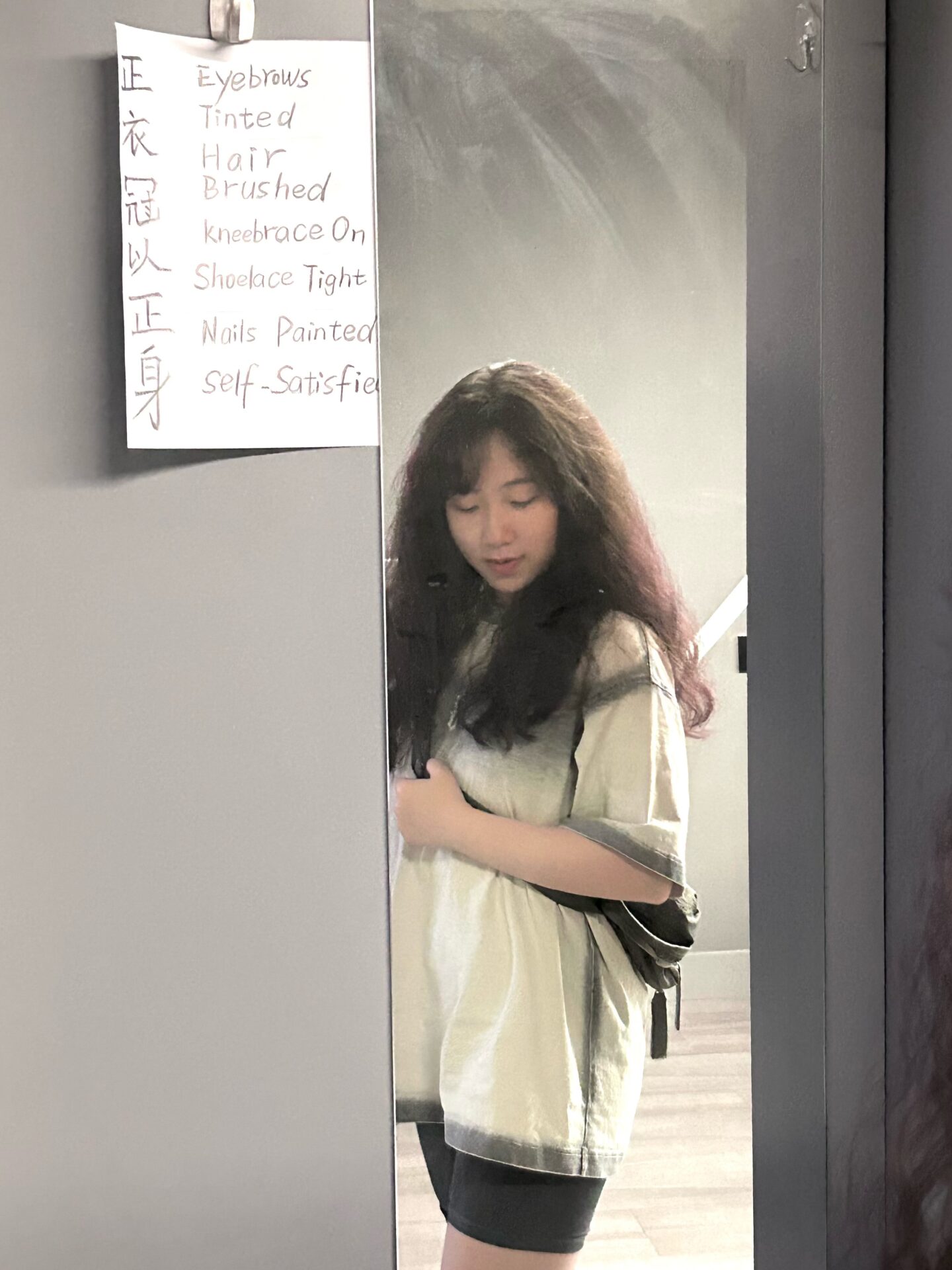
Xiyu
Eyebrows Tinted
Hair brushed
Knee brace on
Shoelace tight
Self Satisfied
Translated from Mandarin ‘correcting your dress is the first step to correcting your morality’
The above quote is from mirrors in Chinese schools.
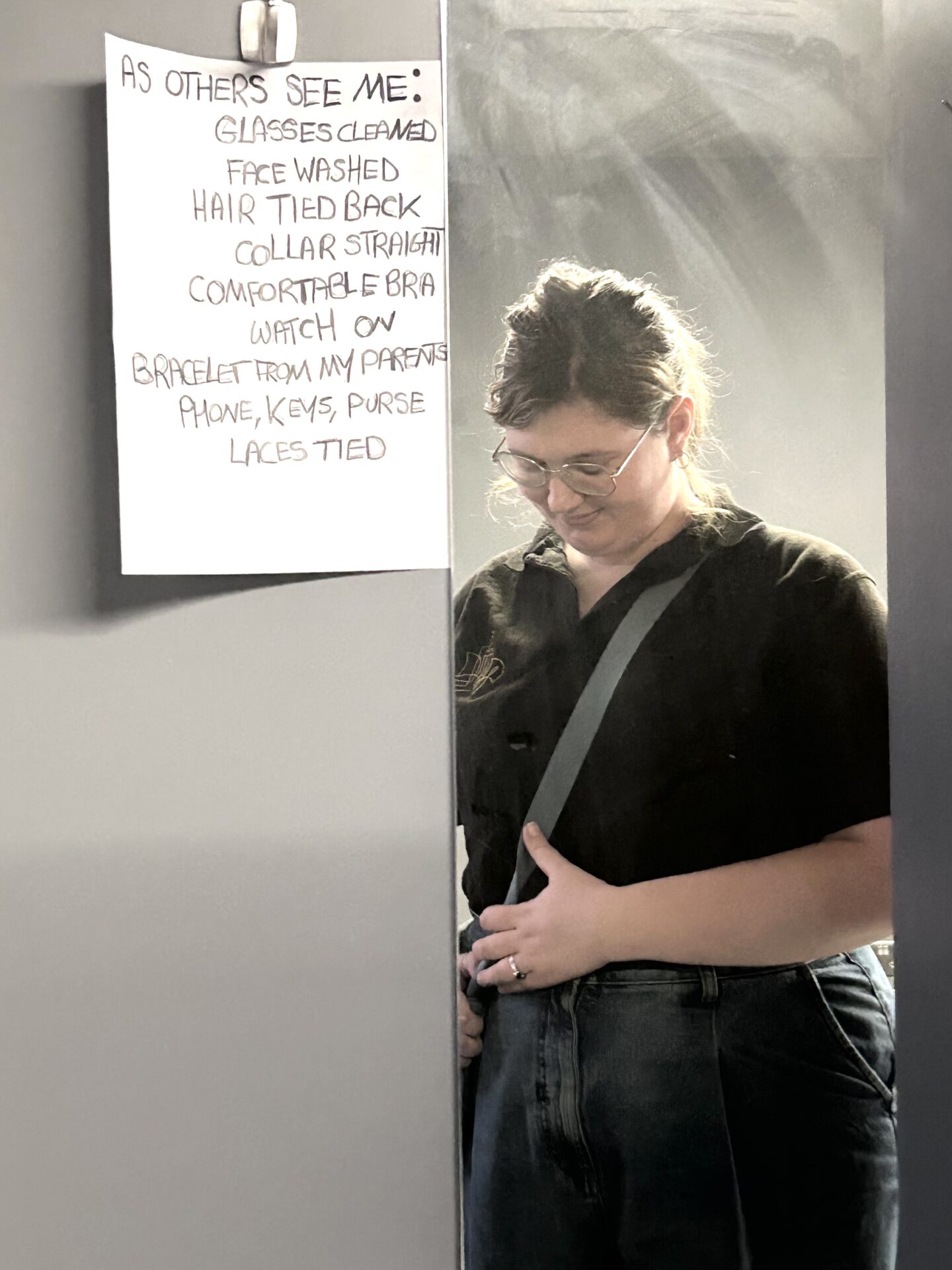
Frankie
As others see me:
Glasses cleaned
Face Washed
Hair tied back
Collar straight
Comfortable bra
Watch on
Bracelet From my parents
Phone, keys, purse
Laces tied
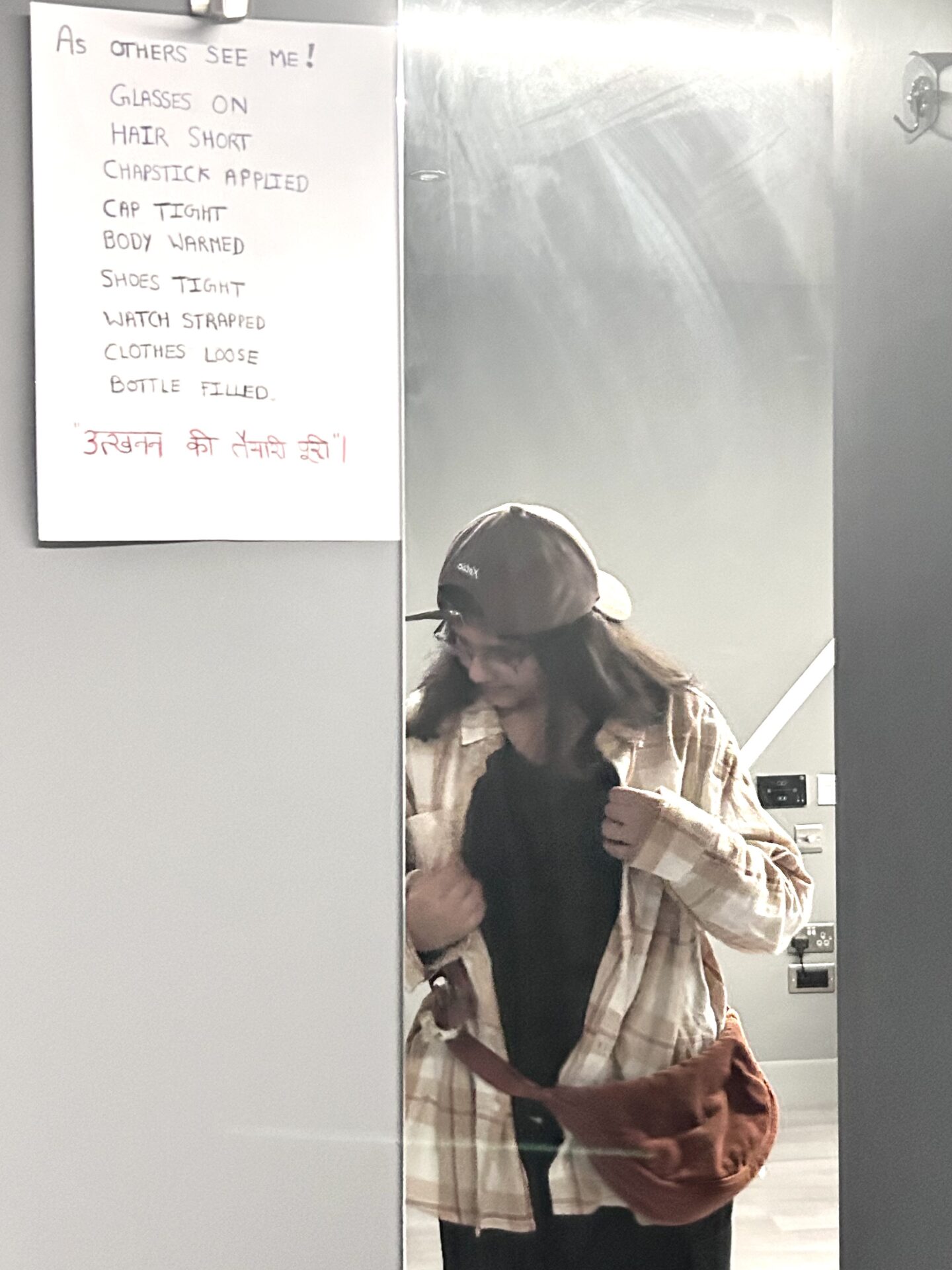
Sakshi
As others see me!
Glasses on
Hair short
Chapstick applied
Cap tight
Body warmed
Shoes tight
Watch strapped
Clothes loose
Bottle filled.
Translated from Hindi ‘The preparation for excavation is complete’
This is what Sakshi has worn when working as an archeologist.
This Exhibition uses the Smithsonian Institution collection. Every image displayed is either within the public domain or created by the curators.

For more information: https://www.si.edu/Termsofuse

Opening image: Teal and Orange Roadside Motivational Rest Quote Animated Social Media ,@mysocialdesigner, Canva.

Curators: Frankie Crombie- Art Gallery and Museum Studies

Xiyu Tan – Art Gallery and Museum Studies

Sakshi Manoj Sharma- Arts Management and Heritage Studies