

Hear the story
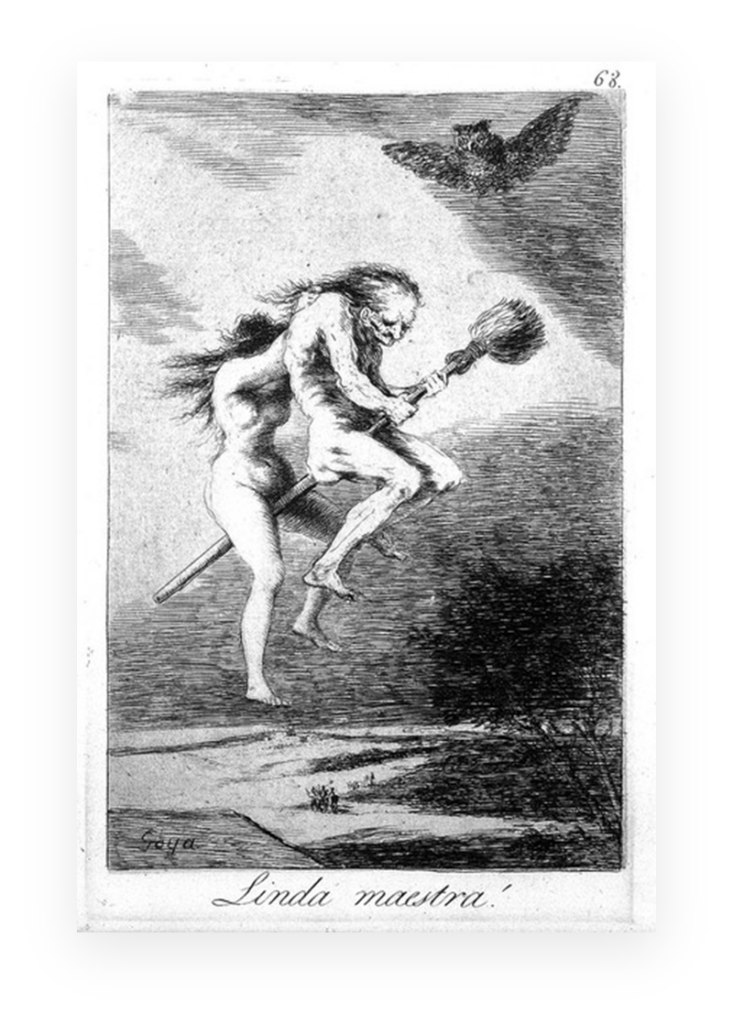
Goya, Francisco, 1796/1798, Etching with aquatint ; Platemark 21.3 x 15 cm

Goya, Francisco, 1796/1798, Etching with aquatint ; Platemark 20.1 x 15 cm
These drawings highlight how witches were viewed by society, often depicted as naked and grotesquely ugly. Nakedness symbolised moral corruption, vulnerability to evil, and a rejection of Christian values, while grotesque features like warts and haggard faces linked physical ugliness to inner depravity. This dehumanisation highlights societal fear of transgressive women. As a result, women suffering from psychological challenges, or chose to live beyond society’s boundaries, were more likely to be accused of witchcraft.
An episode in Macbeth by William Shakespeare: the three witches.
Mezzotint by J.R. Smith, 1785, after H. Fuseli, 1783, Mezzotint ; 43.9 x 53.5 cm
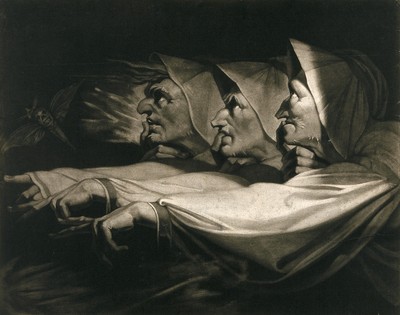
Portrayals of witches in the media served as powerful propaganda, designed to justify the persecution of women on the fringes of society. The play Macbeth reflects this issue. Shakespeare’s infamous depiction of the three witches in Macbeth reinforced societal anxieties by portraying witches as agents of chaos who manipulate the protagonist toward the murder of the King.
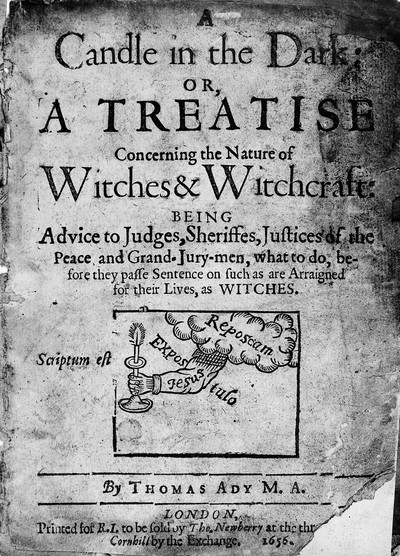
A candle in the dark: or, a treatise concerning the nature of witches and witchcraft: being advice to judges, sheriffes … what to do, before they passe sentence on such as are arraigned for their lives, as witches
Ady, Thomas, 1656
Treatises on witchcraft played a crucial role in linking perceptions of women, mental health, and accusations of witchcraft. Written by theologians, scholars, and judges, such texts provided an ‘intellectual’ basis for identifying and prosecuting witches. These works codified social fears of women’s alleged susceptibility to witchcraft due to their perceived emotional instability, moral weakness, and sexual deviance. This perpetuated a culture that stigmatised women’s mental health struggles, fostering a legacy of fear and marginalisation that persisted long beyond the witch trials.
Image source:
https://wellcomecollection.org/works/eknwwz6s